The tightening torque of screws is an essential parameter in any mechanical joint, especially in industrial environments. Applying the correct torque prevents failures such as breakage, deformation or loosening, ensuring safe and efficient assembly.
Factors that determine tightening torque
The tightening torque required for a screw depends on several factors that affect the tension generated in the joint:
Diameter and thread pitch: larger diameter or coarse pitch screws require more tightening torque to achieve the correct preload.
Strength class (8.8, 10.9, 12.9): defines the screw’s ability to withstand stress without deforming or breaking.
Assembly conditions: friction between the threads varies depending on whether the fastening is dry or lubricated. In lubricated assemblies, the tightening torque must be adjusted (approximate reduction of 10-20%).
Thread type (metric, Whitworth, self-tapping): each thread profile transmits the tightening torque differently and requires adjustment of the applied torque.
Applying the correct tightening torque ensures that the fastening correctly supports the working loads without compromising the integrity of the materials.
Tightening torque table according to DIN/ISO
Below is a guide table with tightening torque values according to DIN/ISO standards, depending on the diameter and strength class of the screw.
Diameter (mm) | Class 8.8 (Nm) | Class 10.9 (Nm) | Class 12.9 (Nm) |
| M5 | 5.5 | 7.8 | 9.8 |
| M6 | 9.5 | 14 | 17 |
| M8 | 23 | 34 | 41 |
| M10 | 46 | 68 | 82 |
| M12 | 79 | 117 | 140 |
| M16 | 195 | 295 | 355 |
| M20 | 385 | 590 | 710 |
| M24 | 665 | 995 | 1200 |
Note: approximate values.
How to apply the correct tightening torque
To ensure safe assembly, it is essential to follow these recommendations:
- Use torque wrenches to apply the exact torque as specified.
- Take into account whether the assembly is dry or lubricated, as friction affects the tightening value.
- Check the strength class of the screw (8.8, 10.9, 12.9) engraved on the head.
- Avoid random retightening without torque control.
What tools are used to apply the tightening torque?
To ensure that the tightening torque complies with the specified values, it is essential to use calibrated tools that allow precise control of the force applied. The main ones are:
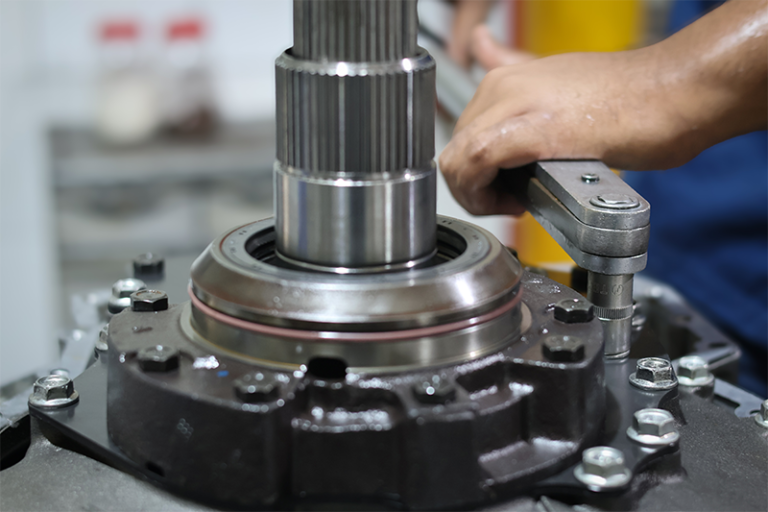
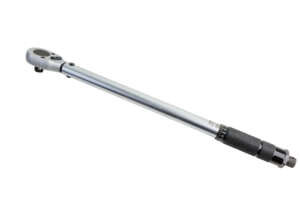
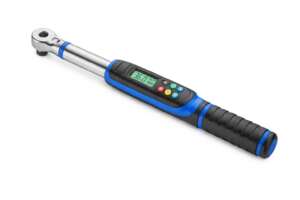
Torque wrench (manual torque meter):
La herramienta más común en montajes industriales y de mantenimiento. Permite ajustar el par de apriete de forma manual, con un rango de precisión adecuado para la mayoría de aplicaciones estándar.
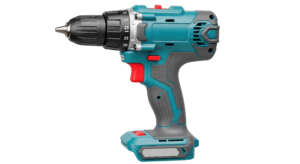
Electric or pneumatic screwdrivers with torque control:
Used in production lines and automated assemblies. They incorporate electronic or mechanical control systems to ensure that each screw is tightened to the exact torque.
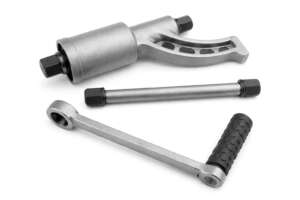
Torque multipliers:
Mechanical tools that allow high torque to be applied to large-diameter screws, multiplying the force exerted manually in a controlled manner.
Electronic torque wrenches:
They offer high precision and record tightening data, ideal for critical applications where it is necessary to document the values applied (aeronautics, automotive, industrial structures).
Important recommendations:
- Always check the calibration of the tools.
- Use adapters (sockets, bits) compatible with the screw head.
- Take into account the condition of the contact surface (dry or lubricated) when selecting the tightening value.
How to calculate the tightening torque of a screw? Practical example:
Let’s look at an example: an M10 class 8.8 screw in a dry assembly. According to the tightening torque table, an M10 class 8.8 screw requires a torque of approximately 46 Nm.
Important considerations:
- If the assembly is lubricated (oil, paste), the torque is reduced by 10-20% to avoid over-tightening.
- If the base material is soft (aluminium, engineering plastics), it is advisable to adjust the maximum torque or use pressure washers to better distribute the load.
Approximate basic formula:
Tightening torque (Nm) ≈ (0.2 x Nominal diameter (mm)) x Tensile load (N)
This formula is a general guideline. For critical applications, specific DIN standards and friction coefficients must be considered.
At CHAVESBAO, we help you select the right screw and tightening torque for each project, ensuring safe and durable assembly. Contact us for advice on choosing fasteners in accordance with DIN and ISO standards.