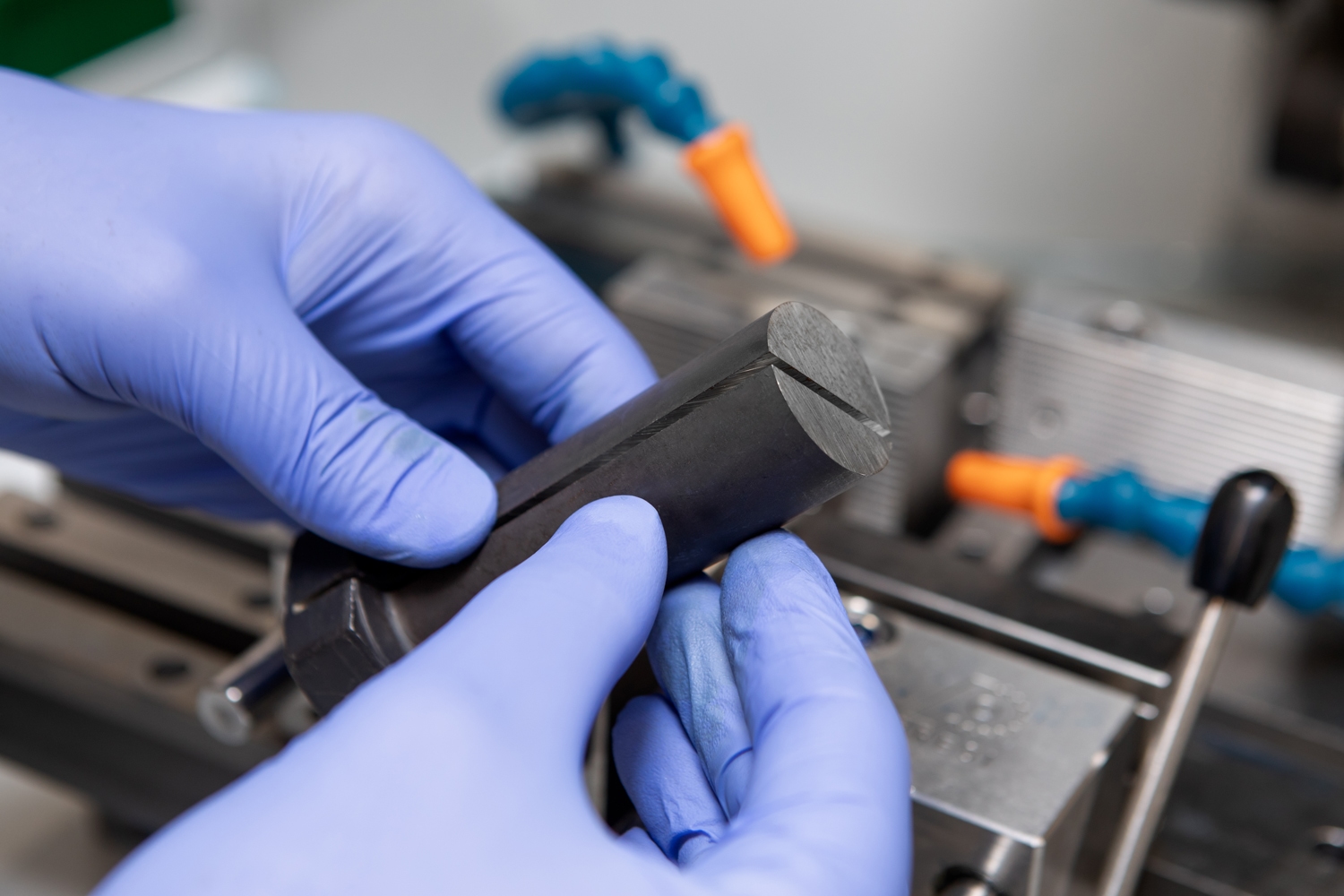
Quality Control and Testing
We have our own testing laboratory and advanced control systems to guarantee the quality, reliability, strength and traceability of every fastener component. From consultancy to mechanical testing and coating analysis, we offer our knowledge, experience and technical resources to ensure every project fits perfectly.
In-house laboratory for fastener inspection
Our in-house laboratory enables us to verify that each batch complies with the technical specifications in accordance with the standard for each product.
We carry out checks both on incoming products and specific validations depending on the application or customer requirements.
Mechanical and physical testing of fasteners
We carry out technical tests to ensure that each component performs correctly under real-world conditions.
Hardness testing
Measurement using standardised methods:
- Rockwell (HRC)
- Vickers (HV)
- Brinell (HB)
We verify correct correspondence with strength classes such as 8.8, 10.9 or 12.9.
Tensile tests
We have a tensile testing machine to check:
- Yield strength
- Tensile strength
- Load testing
Particularly relevant for structural fasteners or critical applications.
Corrosion-resistant coating tests
We assess the quality and performance of surface treatments by:
- Coating thickness measurement
- Salt spray chamber testing (ISO 9227)
- Adhesion testing
Essential for marine environments, solar installations and outdoor applications.
Metallographic analysis and fault detection
Our quality control also includes advanced analyses to study material behaviour.

Microscopy and metallography
We analyse the internal structure of the steel to detect: incorrect heat treatments, cracks and/or structural defects.
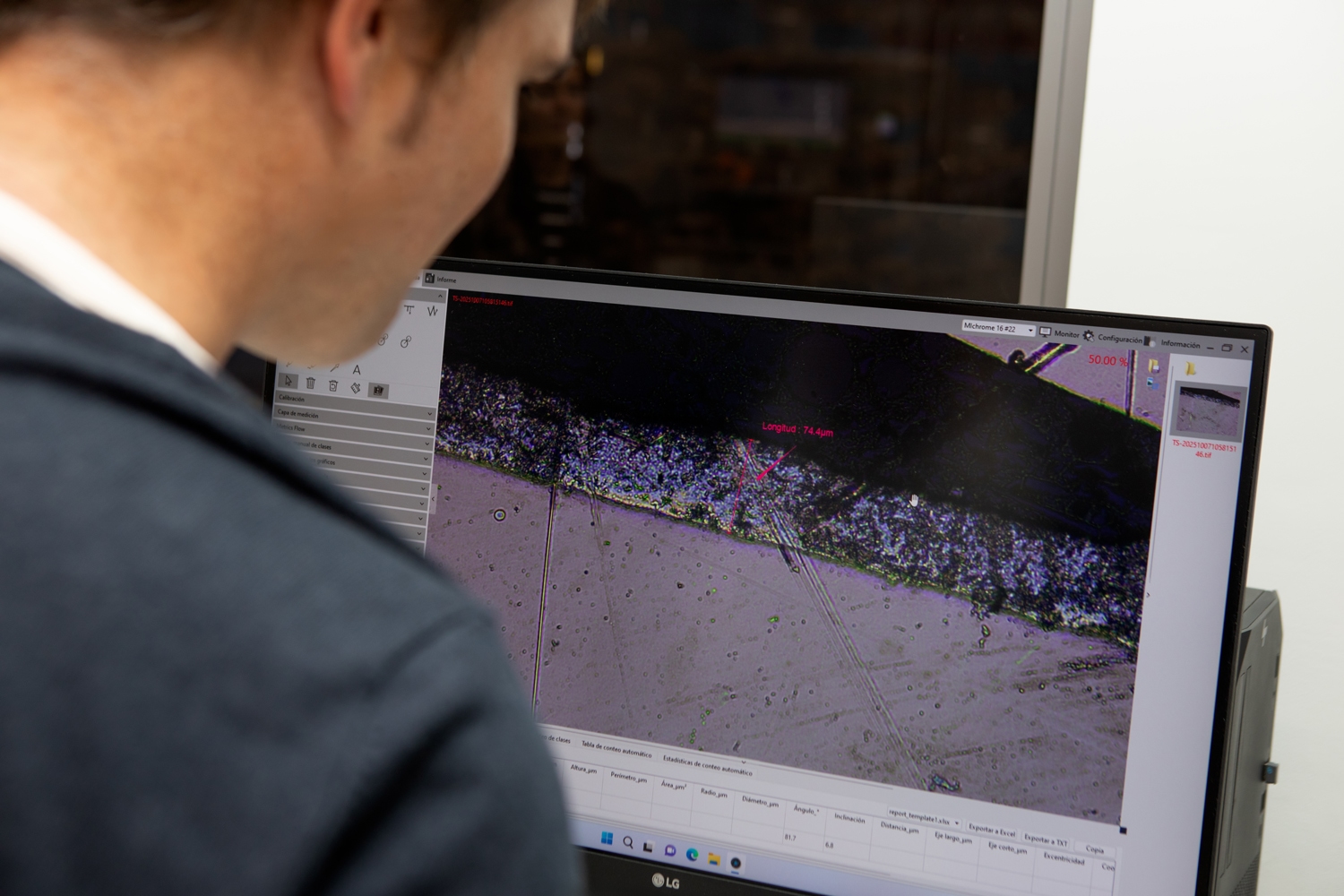
Fracture and defect assessment
In the event of incidents, we carry out investigations to identify the cause of the failure, improving traceability and future prevention.
Commitment to traceability and reliability
Our control system enables:
Batch verification
Documentation

Quality certifications
Guarantee of conformity
At CHAVESBAO, every product undergoes a validation process that reinforces our commitment to distributors, procurement managers and industry professionals.
Frequently asked questions about quality control in fasteners
What tests are carried out on structural fasteners?
Tensile, hardness and dimensional verification tests in accordance with standard EN 15048.
Are anti-corrosion coatings verified?
It is the microscopic examination of steel to check its internal structure and the quality of the heat treatment.
What is a metallographic analysis?
It is the microscopic examination of steel to check its internal structure and the quality of the heat treatment.
What is the difference between Rockwell, Vickers and Brinell hardness tests?
They differ in the measurement method, the type of indenter and the applied load, and are suited to different materials and hardness ranges.
How is the traceability of fasteners guaranteed?
Through batch identification, documentary records and quality certificates associated with each supply.
What defects can be detected in a metallographic analysis?
Cracks, inclusions, decarburisation, inappropriate grain size or incorrect heat treatments.
Why is tensile testing important for fasteners?
It allows us to verify that the material can withstand the loads for which it has been designed without failing.
Is every batch of fasteners tested?
Yes, checks are carried out on a sample or batch basis to ensure compliance with technical specifications.