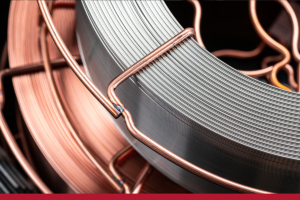
MIG welding is widely used in metal fabrication and industrial maintenance due to its ability to produce continuous joints with high deposition rates and consistent results. It is commonly used on carbon steels, stainless steel and aluminium, in both manual and automated processes.
The combination of suitable consumables and carefully adjusted welding parameters allows the process to be tailored to the base material, the thickness and the service conditions of the joint. Consequently, it is a common solution in production environments where efficiency and repeatability are key.
What is MIG welding and how does the process work?
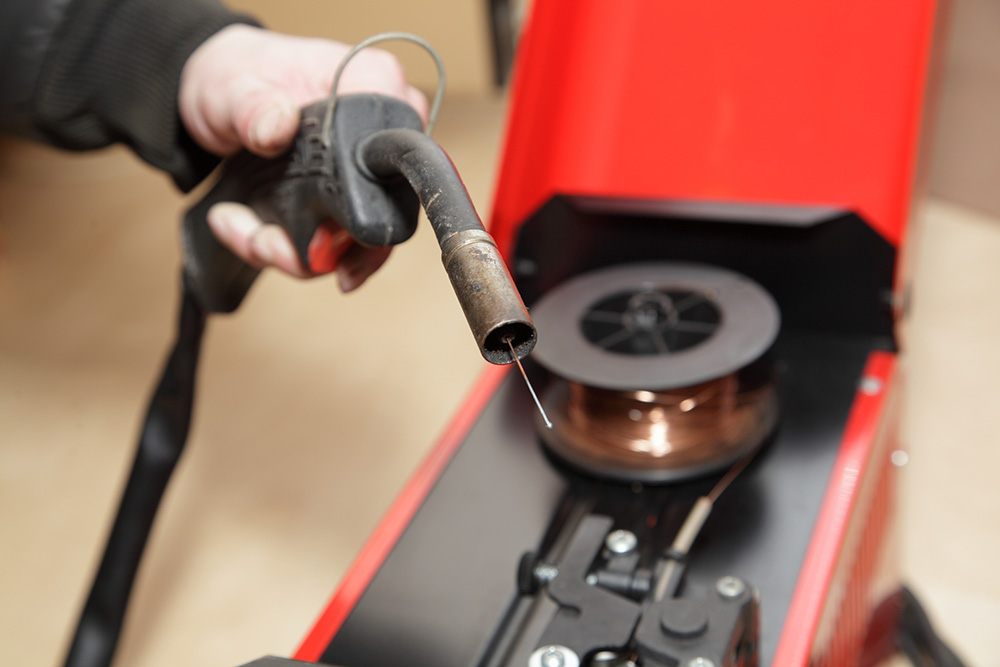
MIG welding is an electric arc welding process in which the filler material is fed via a continuous wire that acts as both the electrode and the filler metal. The arc is generated between the wire and the workpiece, melting both materials to form the joint.
During the process, a shielding gas envelops the molten pool to prevent atmospheric contamination and improve the stability of the weld bead. This configuration allows for high deposition rates and facilitates its integration into semi-automatic and automated processes.
Differences between MIG and MAG welding
Although they are often mentioned together, MIG welding and MAG welding differ mainly in the type of shielding gas used during the process.
MIG welding uses inert gases, such as argon or argon-based mixtures, which are suitable for working with materials such as aluminium or stainless steel. In contrast, MAG welding uses active gases, such as mixtures of argon and carbon dioxide, which are commonly used in the welding of carbon steels.
Both processes belong to the same family of continuous-feed welding and share similar equipment and filler materials, adapting to different base materials through the selection of the appropriate shielding gas.
Filler materials used in MIG welding
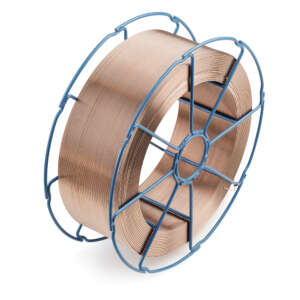
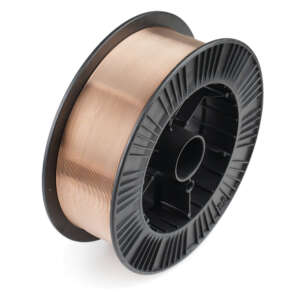
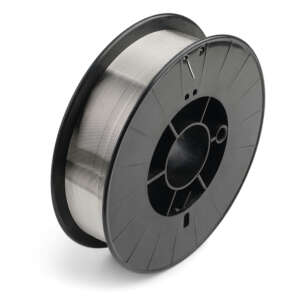
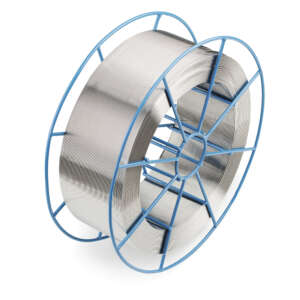
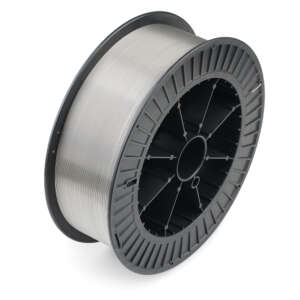
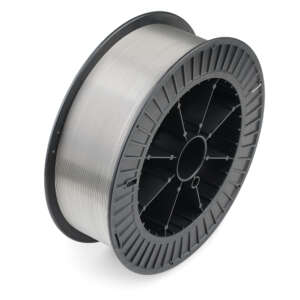
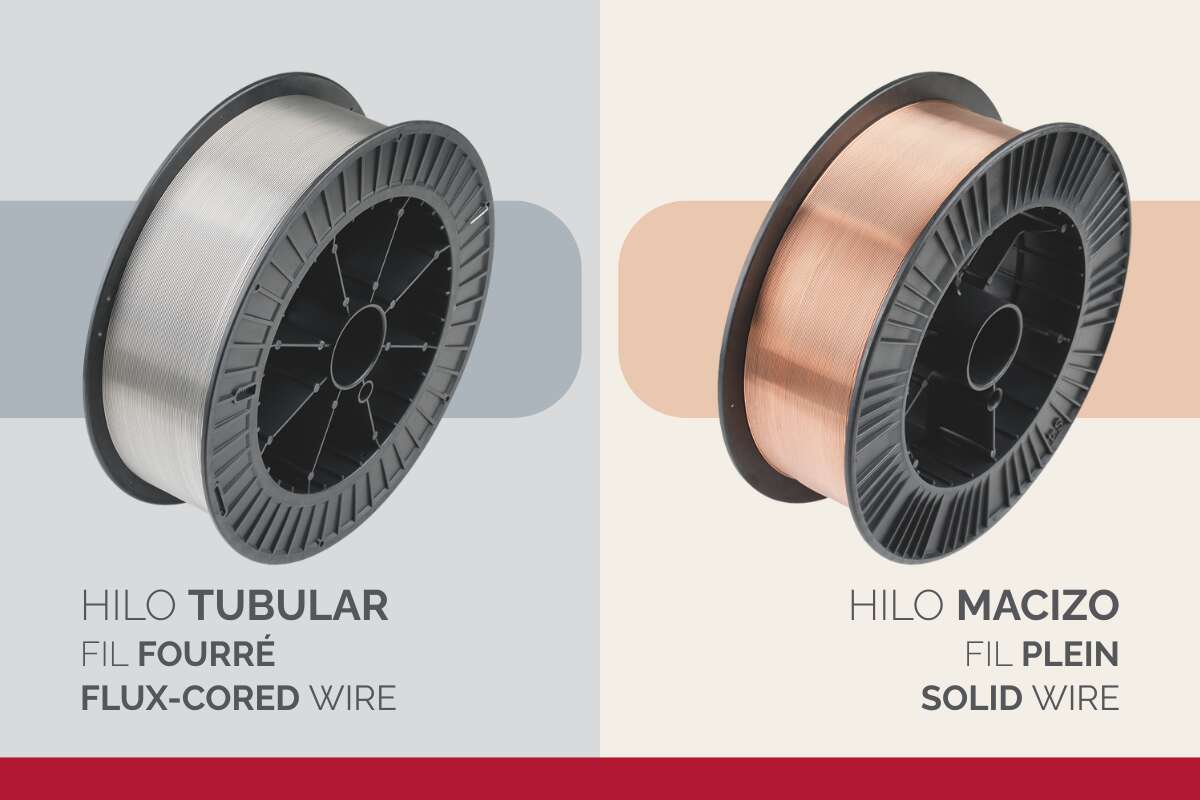
The choice of filler material is one of the most important factors in ensuring the stability of the process and the mechanical properties of the joint. In MIG welding, solid wires and cored wires are mainly used, selected according to the base material and the operating conditions.
Solid MIG welding wire
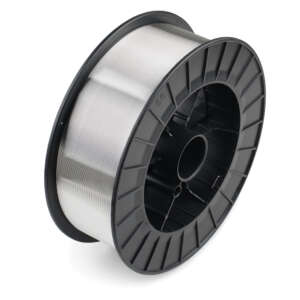
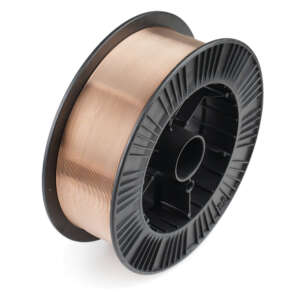
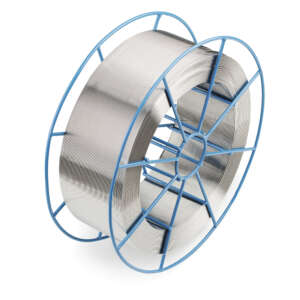
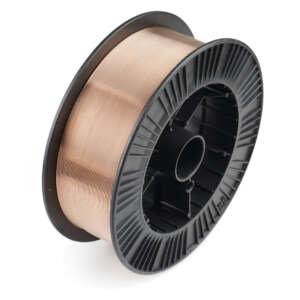
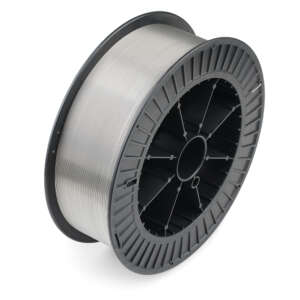
Solid wire is commonly used in general metal fabrication and structural applications where arc stability and good weld bead quality are required. It is suitable for carbon steels, stainless steels and aluminium, using the appropriate shielding gas.
Tubular wire for MIG welding
The tubular wire incorporates a core containing components that enhance characteristics such as penetration, arc stability and productivity. It is frequently used in heavy manufacturing, structural work and industrial maintenance.
Shielding gases in MIG welding
The shielding gas plays a vital role in arc stability and the final quality of the weld bead. The choice of gas depends on the base material and the type of application.
The most commonly used gases include:
- Argon for aluminium and stainless steel
- Mixtures of argon and carbon dioxide for carbon steels
- Carbon dioxide in high-productivity structural applications
Choosing the right gas improves penetration, reduces spatter and optimises the surface finish of the weld bead.
Materials that can be welded using the MIG process
MIG welding is a versatile process that can be used on a range of metallic materials commonly found in industry.
It is one of the most common applications, particularly in metal structures, sheet metal work and industrial maintenance, where strong joints and high productivity are required.
It is used when it is necessary to maintain the base material’s corrosion resistance and to achieve a clean, controlled weld bead.
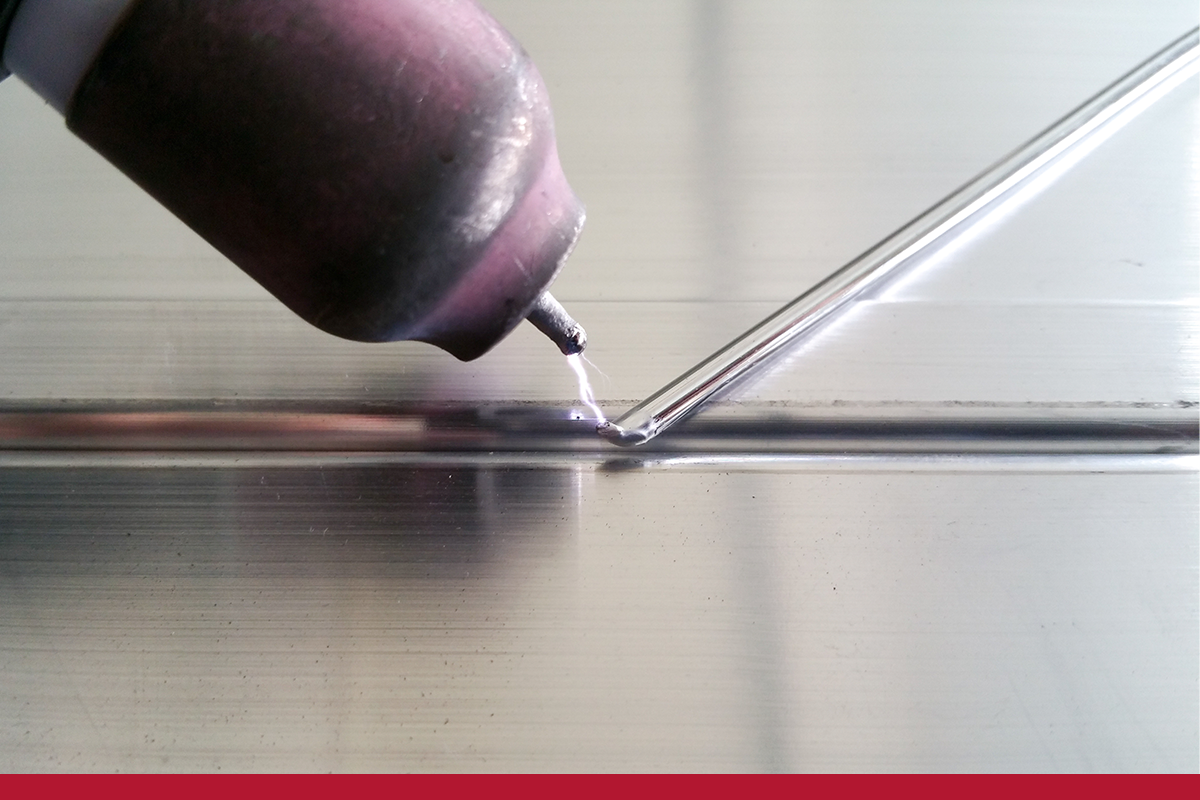
It enables aluminium to be worked efficiently using specific wires and suitable shielding gases, making it commonly used in light manufacturing and alloy structures.
Common industrial applications of MIG welding
MIG welding is used in numerous industrial sectors due to its speed and ease of automation.
Its most common applications include:
- the manufacture of metal structures
- boiler making and metal construction
- industrial maintenance
- equipment manufacturing
- repetitive production runs
Its ability to adapt to different thicknesses and materials makes it a common solution in manufacturing environments.
How to choose the right wire for MIG welding
Choosing the right MIG welding wire helps to improve process stability and ensure the mechanical properties of the weld joint, depending on the base material and the working conditions.
To this end, it is important to consider:
- the type of material to be welded
- the thickness of the workpiece
- the welding position
- the working environment
- the required productivity
Choosing the right filler material helps to optimise weld bead quality and process efficiency in metal fabrication and industrial maintenance.