Main types of TIG rods

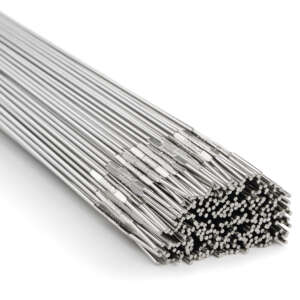
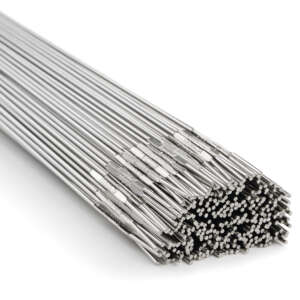
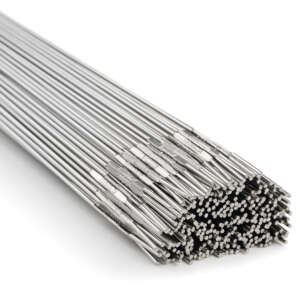
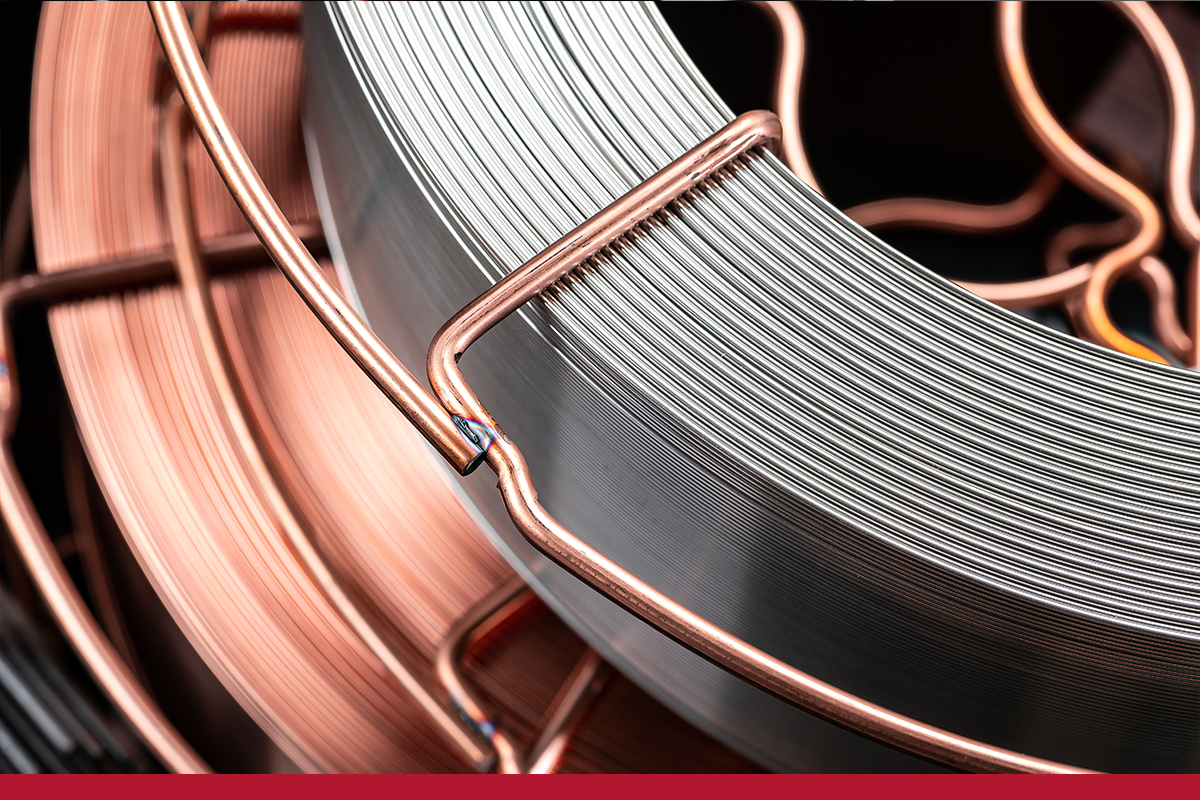
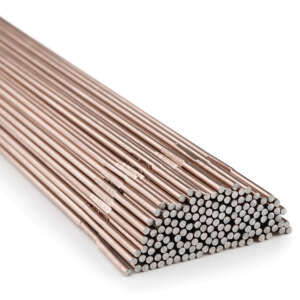
TIG rods are the filler material that is manually added to the molten pool during TIG (Tungsten Inert Gas) welding, a process in which the tungsten electrode does not contribute material but instead generates the electric arc. The choice of the appropriate rod depends on the base material, the thickness of the workpiece and the mechanical or finish requirements of the joint; therefore, understanding the main types is key to achieving a uniform weld bead that is compatible with the metal being welded.

Classification of TIG rods according to base material

TIG rods are mainly categorised according to the material to be welded, as each alloy requires a compatible chemical composition to prevent defects such as cracks, porosity or a loss of mechanical properties.

Carbon steel welding rods, such as the W3Si1, are manufactured in accordance with the UNE-EN ISO 636-A standard and are equivalent to the AWS ER70S-6 classification. They have a tensile strength of up to 540 N/mm² and a yield strength of up to 420 N/mm², making them suitable for welding in the flat, horizontal and vertical-up positions in the construction, boiler-making and shipbuilding industries.

For stainless steel, there are variants such as 308LSi, 316LSi and 309LSi, which are suitable for martensitic and austenitic stainless steels, including: 316, 316L, 316Ti and 316Nb. They can withstand temperatures of up to 1,100 °C, making them suitable for use in construction, machinery and pipework repairs.

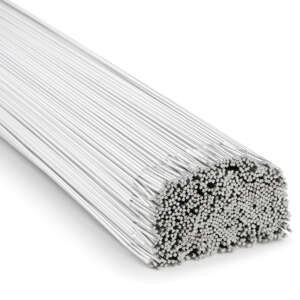
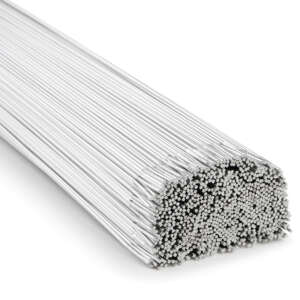
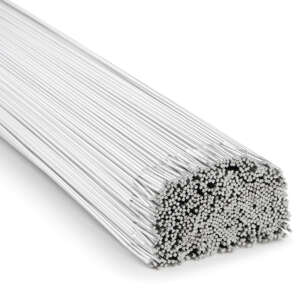
In aluminium, the TIG rods differ primarily in their magnesium or silicon content: ER5356 contains 5% magnesium, ER4043 contains 5% silicon, and ER4047 has a silicon content of up to 12%, with small amounts of magnesium and copper. They are used in construction, shipbuilding and the automotive industry, improving the fluidity of the molten metal and the corrosion resistance of the joint.

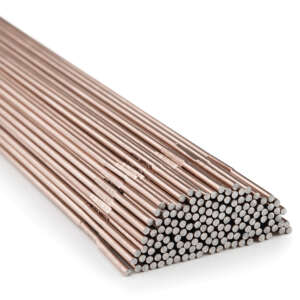
For copper and its alloys, the ERCuSi-A rod is used; it is suitable for CuSi3-type bronze alloys in the manufacture of electrical components and pipework, and is also suitable for copper-nickel alloys. It offers high corrosion resistance, good performance at high temperatures and the electrical conductivity required for critical applications.

Comparison of TIG rods by base material

Base material

Designation / standard

CHAVESBAO reference

Typical application

Carbon steel

W3Si1 (UNE-EN ISO 636-A) / equivalent to AWS ER70S-6

GW STICK 3.10

Construction, boilermaking, shipbuilding

Stainless steel

308LSi / 316LSi / 309LSi (UNE-EN ISO 14343-A)

GW STICK 3.30 / 3.31 / 3.32

Construction, machinery, pipe repair

Aluminium

ER5356 / ER4043 / ER4047 (UNE-EN ISO 18273-A)

GW STICK 3.50 / 3.51 / 3.53

Construction, shipbuilding, automotive

Copper and alloys

UNE-EN ISO 24373 

ERCuSi-A rod

Electrical components, pipework, applications requiring high conductivity

TIG rod diameters by base material

The available diameter varies not only between materials, but also between grades of the same material:

Base material

Reference

Available diameters (mm)

Carbon steel

W3Si1

1.6 / 2.0 / 2.4 / 3.2

Stainless steel

308LSi

1.0 / 1.2 / 1.6 / 2.0 / 2.4 / 3.2

Stainless steel

316LSi

1.0 / 1.2 / 1.6 / 2.0 / 2.4 / 3.2

Stainless steel

309LSi

1.6 / 2.0 / 2.4

Aluminium

ER5356

1.6 / 2.0 / 2.4 / 3.2

Aluminium

ER4043

1.6 / 2.0 / 2.4 / 3.2

Aluminium

ER4047

2.0 / 2.4

The 308LSi and 316LSi offer the widest range of diameters, with sizes starting from 1.0 mm for precision thin sheet metal. The 309LSi and ER4047 have a more limited range of sizes: the former ranges from 1.6 mm to 3.2 mm, whilst the latter is only available in 2.0 and 2.4 mm. Generally speaking, smaller diameters are used for thin-walled parts or precision work, whilst larger diameters allow more material to be deposited on thicker sections or during build-up passes. It is advisable to confirm the exact diameter of the selected product code before ordering, as not all rods made from the same material cover the same range.

Criteria for choosing the right TIG rod

When selecting a TIG rod, consideration must be given to the base material and its composition, the thickness of the workpiece, the welding position and the service conditions of the joint, such as exposure to corrosion or mechanical stresses. Incompatibility between the rod and the base material can lead to cracks, lack of fusion or a loss of properties following the welding process.

Choosing the correct type and diameter of TIG rod helps to improve the stability of the molten pool, the quality of the weld bead and the reliability of the joint in metal fabrication, industrial maintenance and precision work.

At CHAVESBAO, we stock TIG rods for carbon steel, stainless steel, aluminium and copper, manufactured to UNE-EN ISO and AWS standards, ready to suit different base materials and welding requirements. Consult our TIG rod catalogue and contact our technical team with any queries regarding the most suitable product for your project.

Do you need more information?

CHAVES BILBAO, S.L. informs you that the personal data provided voluntarily on this website, the purpose, intended transfers and other circumstances of which are communicated when the personal data is collected, may, depending on the specific case, have any of the following purposes: responding to your request, complaint or question, maintaining the established relationship, the comprehensive and commercial management of customers, accounting and invoicing or sending of communications of news and activities related with CHAVES BILBAO, S.L., including by electronic means. The data included in our files is absolutely confidential and will be processed with the utmost confidentiality and in compliance with all the requirements set out in the General Data Protection Regulation (GDPR) of the 27th of April 2016. The data is registered in our files for the time necessary for the purpose for which it was collected. The period during which the personal data will be kept will be that established by current legislation and always during the period of the provision of the service for which it was provided. We do not recommend sending personal data that is classified as highly confidential by data protection legislation, such as that related to health, as it is not sent coded or encrypted. Therefore, if you send this type of data, it will be at your own risk. The user may at any time exercise their rights to access, rectify, oppose, cancel, limit processing or request its portability in accordance with the General Data Protection Regulation (GDPR) of the 27th of April 2016, sending a letter along with a photocopy of their DNI identity document, to CHAVES BILBAO, S.L. C/Bizkargi, 6 Polígono Industrial Sarrikola 48195 Larrabetzu - Bizkaia - Spain, or using the email address info@chavesbao.com.
Read more